Wax and ceramic coating get framed as competitors, but they're really different tools from different eras solving the problem of "protect the paint" to very different depths. Here's what each actually is, without the marketing gloss.
What wax is
Wax — carnauba blends and modern synthetic sealants — is a soft, sacrificial layer that sits on top of your clear coat. It adds warmth and wet-look gloss, mild water beading, and a short-lived barrier against light contamination. Its defining trait is impermanence: heat, sun, washing, and rain all strip it. In a North Texas summer, where panel temperatures soar past anything the Gulf Coast carnauba palm ever planned for, a wax coat is typically a weeks-to-a-few-months proposition, then it's gone and the paint is bare again.
What a ceramic coating is
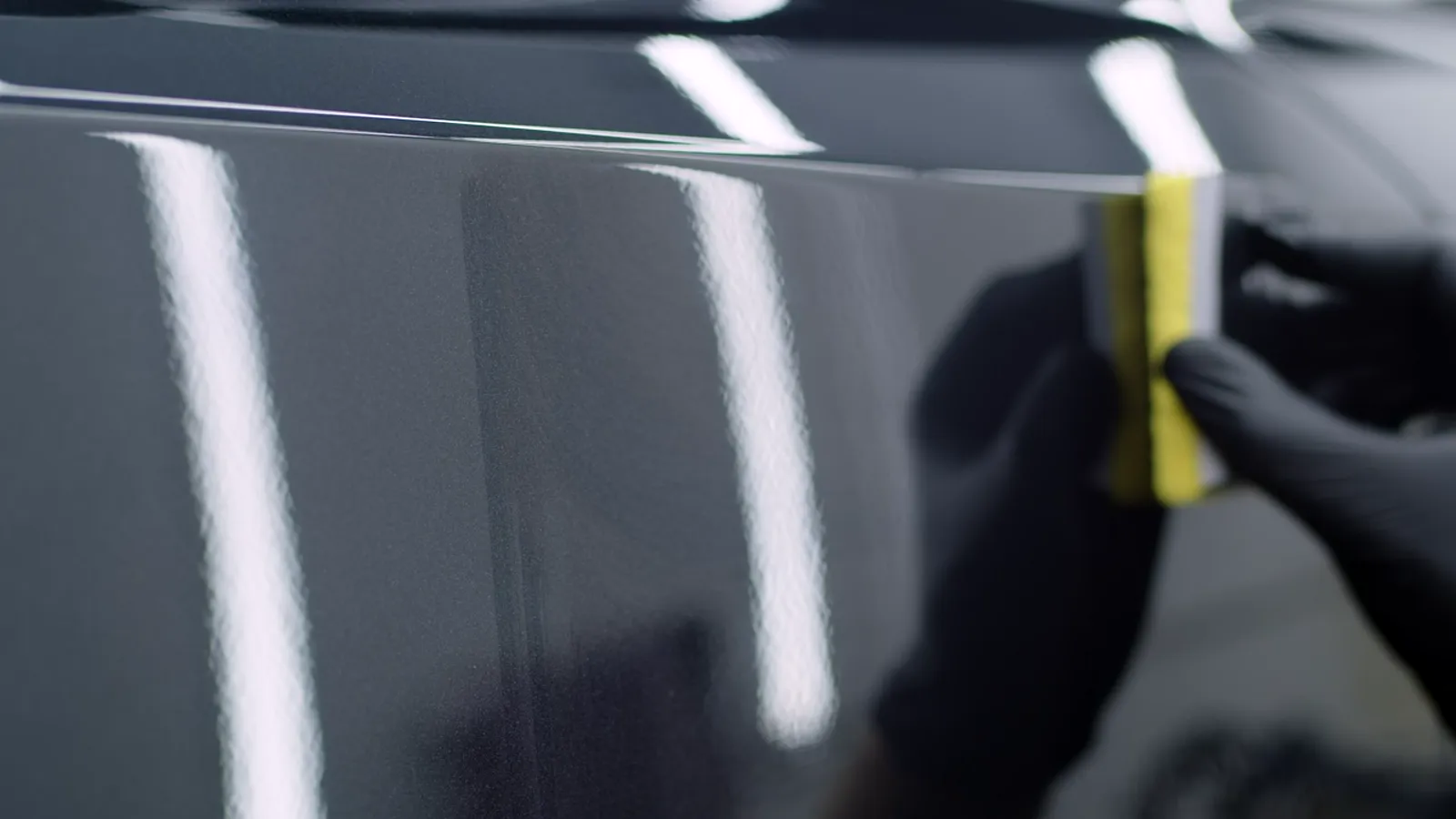
A professional ceramic coating is a liquid polymer (usually SiO₂-based) that chemically bonds to the clear coat and cures into a hard, glass-like layer measured in years rather than weeks. It brings meaningfully stronger UV resistance, chemical resistance against bird droppings and bug acids, aggressive hydrophobics that make hard-water spotting easier to prevent, and a slickness that keeps dirt from gripping. It is not a force field — it won't stop rock chips or excuse you from washing — but it changes what routine neglect costs you.
The comparison that matters
- Durability: wax survives weeks to months in Texas heat; a professionally installed coating is rated in years. This is the fundamental gap everything else follows from.
- Protection: wax softens the blow of light contamination; ceramic materially resists UV, chemical etching, and bonded fallout.
- Gloss: fresh wax has a warm, deep look that enthusiasts genuinely love — for the weeks it lasts. Ceramic holds a sharper, glassier gloss continuously.
- Maintenance: wax means re-application every season. Ceramic means easier washes and an occasional topper — the treadmill disappears.
- Up-front cost and prep: wax is cheap and forgiving. Ceramic costs real money because correct installation demands full decontamination and paint correction first — the coating locks in whatever's underneath, flaws included.
When wax is the right answer
Honesty cuts both ways: wax still earns its place. A garage-kept classic that gets driven on nice weekends and enjoys being fussed over; a car you're selling next quarter that just needs to look its best cheaply; an owner who genuinely enjoys the ritual. In those cases a quality sealant or wax as part of an exterior detail is money well spent.
When ceramic is the right answer
A daily driver that parks outside in DFW sun. A truck that works. A new car you intend to keep five years. Anything whose resale value you care about. If the car lives in the Texas elements and you don't want its condition to depend on your discipline with a wax pad, the coating pays for itself in preserved paint and un-fought Saturday afternoons.
Still torn? Tell us about the vehicle — how it lives, how long you're keeping it — and we'll recommend the honest option, even when that answer is "just seal it this year."